

Yes, the U.S. dollar is still the world’s safe haven
For investors, the real story isn’t the currency’s short‑term swings
5 min read
KEY POINTS
- Despite periodic selloffs, market stress and geopolitical conflict continue to reinforce the U.S. dollar’s safe‑haven status.
- Today’s environment mirrors 2017–2018, when early weakness gave way to a stronger dollar as global growth narratives faltered.
- A diversified approach can help investors stay oriented amid shifting market conditions without relying on any single outcome.
Speculating whether the U.S. dollar will lose its reserve currency status makes for fun conversations at cocktail parties, but during periods of stress, people start singing a different tune. This recent geopolitical turmoil has proven that, despite its fair share of problems in the U.S., we’re still the cleanest shirt in the hamper, and the U.S. dollar remains king.
While this can feel like uncharted territory, the U.S. dollar is following the same trajectory as it did during President Trump’s first term, nine years ago. In both instances, the U.S. dollar peaked around inauguration and continued to fall throughout President Trump’s first year in office.
In 2017, several factors contributed to a softer dollar. President Trump was transparent about his preference for a weaker currency to support U.S. exporters and manufacturing, and currency markets reacted accordingly. Later that year, the passage of the Tax Cuts and Jobs Act increased concerns about fiscal expansion, adding further pressure.
Today, we find ourselves in a comparable environment. An aggressive tariff agenda, combined with fiscal concerns stemming from the One Big Beautiful Bill Act and renewed commentary on the benefits of a weaker dollar, initially weighed on the currency once again.
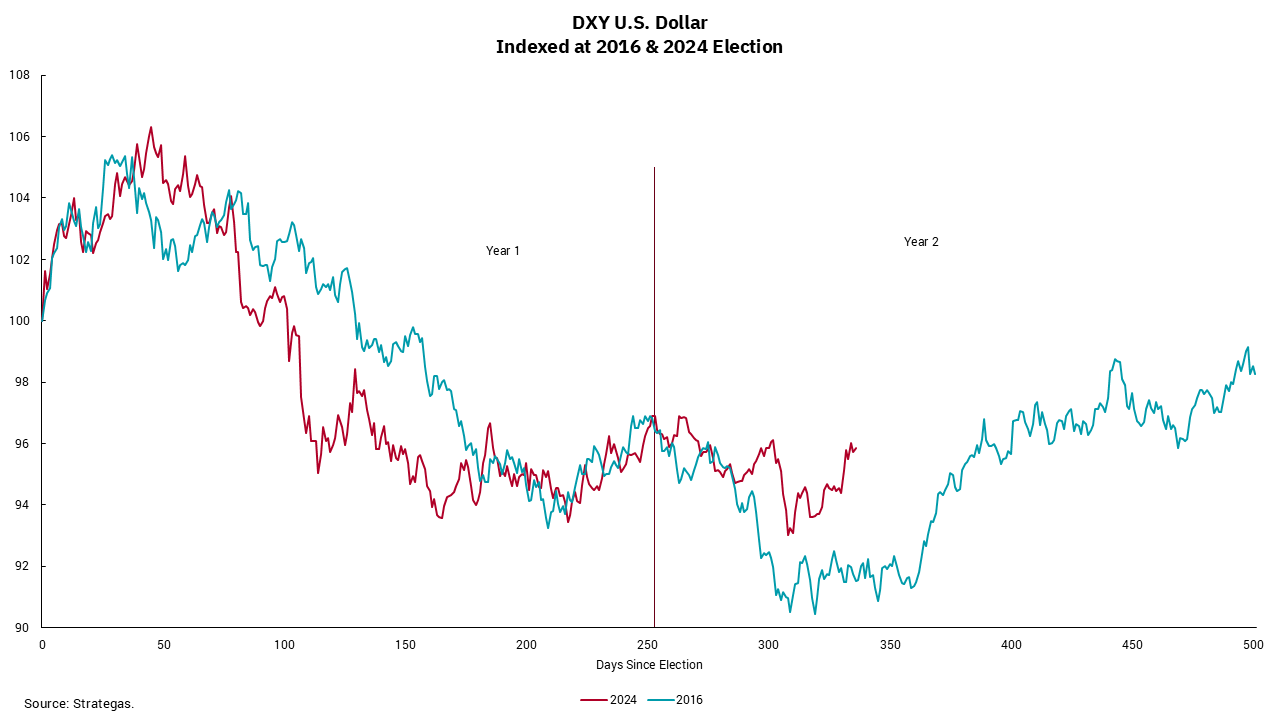
So, what led to a stronger dollar throughout 2018? Early in the year, markets embraced the idea of “synchronized global growth” as investors expected the U.S. and the rest of the world to expand. This caused initial weakness in the U.S. dollar, but when that narrative fell apart, the currency regained its “safe-haven” premium.
Here we are in 2026 with a similar story. Initially, the dollar sold off following President Trump’s comments on his indifference to a weaker currency. Since then, the Supreme Court has cast doubt on the president’s ability to enact sweeping tariffs, the market is starting to price in mid-term elections and friction in Congress, and now we have war in the Middle East.
What does this mean for your portfolio? Fortunately, very little. Our diversified approach is designed to weather changing market environments. We maintain exposure to a broad range of asset classes not because any one area is expected to outperform at all times, but because diversification improves the likelihood of meeting long-term financial goals. As always, our Asset Allocation Committee will make thoughtful, incremental adjustments as conditions evolve. Just as importantly, our process is grounded in humility, recognizing what we can and cannot control and focused on helping you stay invested through uncertainty
Get By the Numbers delivered to your inbox.
Subscribe (Opens in a new tab)