

What’s keeping the U.S. economy upright amid the shock from the U.S.-Iran conflict
Every additional week of conflict raises recession odds, but the chances remain low
5 min read
KEY POINTS
- Geopolitical uncertainty from the Iran conflict is pressuring growth outlooks, particularly due to higher oil and gasoline prices.
- Despite inflation risks, the U.S. labor market remains strong, continuing to support consumer spending and economic growth.
- History suggests that the U.S. economy’s solid starting point is improving its ability to absorb shocks like the U.S.-Iran conflict.
The ultimate impact from the conflict in Iran remains an unknown. The duration of the conflict and the level of damage to energy infrastructure will play a key role in making this assessment. Already the outlook for growth going forward has been revised lower. Moreover, while the chances of a recession remain low, every additional week of conflict will result in higher recession risks.
Against this backdrop, regular readers know the health of the U.S. consumer is a key part of our economic forecast. A majority of our gross domestic product (GDP) is based on consumer spending and having a job is probably the most important aspect of how consumers can behave going forward. At the same time, we also know that higher inflation, driven at present by increases in oil prices which are leading to higher gasoline prices, can squeeze a consumer’s budget even if they are employed. From that perspective, and others, we hope this conflict is resolved quickly.
With that in mind, it is unusual, but we got the monthly employment report from the Bureau of Labor Statistics (BLS) on a day which the capital markets are closed for Good Friday. Market reaction then will have to wait until Monday and who knows what additional news will come our way over the weekend. However, the release does help us assess what the job market was doing as we entered the conflict. In short, while not as robust as some quarters ago, the job market overall remains supportive of the consumer and the outlook for continued growth.
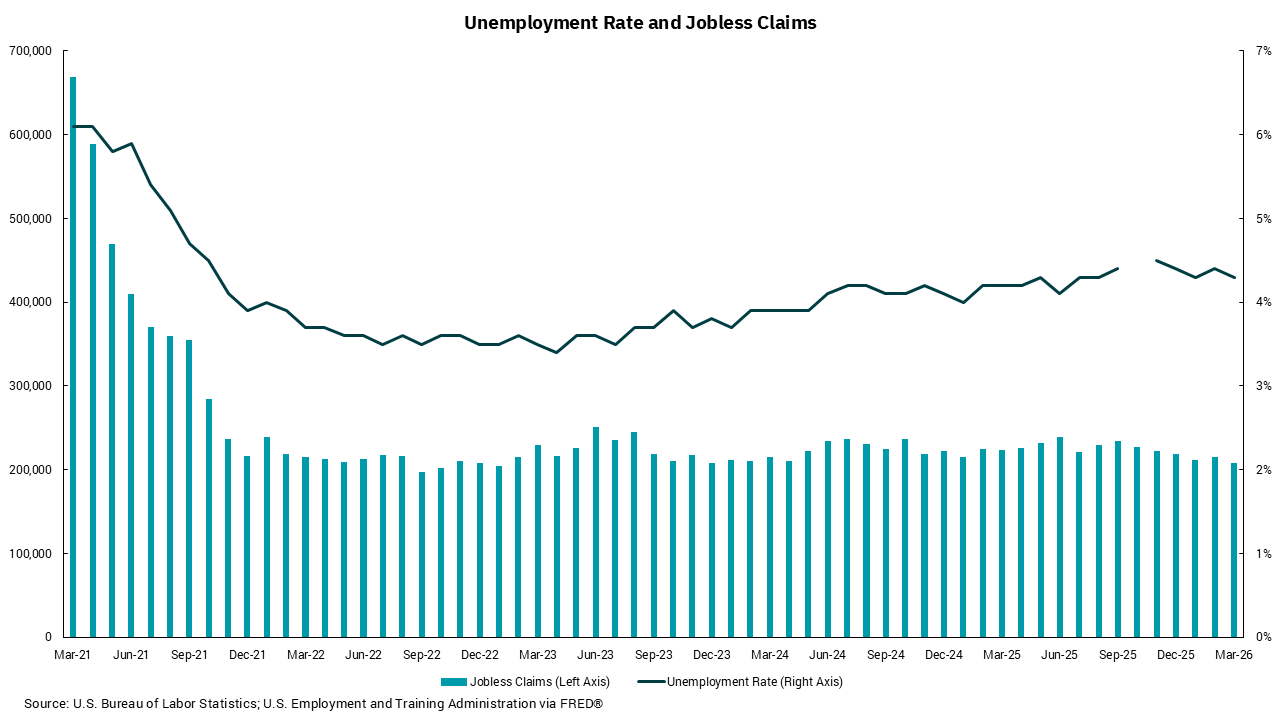
Our chart this week helps illustrate this. The solid line shows the headline unemployment rate (U3) while the bar chart shows the number of new unemployment claims within the weekly jobless claims report. Note the break in the line measuring the unemployment rate which was caused by the government shutdown and the decision to not release the report for November 2025. What we see is an unemployment rate that is higher than a couple of years ago but still low—4.3%, as of March—in historical terms. Even more extraordinary is the ongoing generational low in weekly jobless claims, especially when considering that the size of the U.S. labor force is over 170 million people and weekly jobless claims last week were 202,000. These are numbers we last saw in the 1960s when the labor force was much smaller.
Why is this important? History shows that the U.S. economy’s ability to absorb the shock of an event like the Iran conflict without going into a recession is heavily influenced by the strength of the economy as the shock occurs. From this perspective, the overall data shows our economy was growing and even showing signs of accelerating. So, while growth prospects are being reduced, we are in an advantageous position to be able to absorb the negative implications from higher oil prices and continue to grow. Having said that, if the conflict lasts longer and infrastructure damage increases, we will have to reassess this outlook.
Get By the Numbers delivered to your inbox.
Subscribe (Opens in a new tab)